
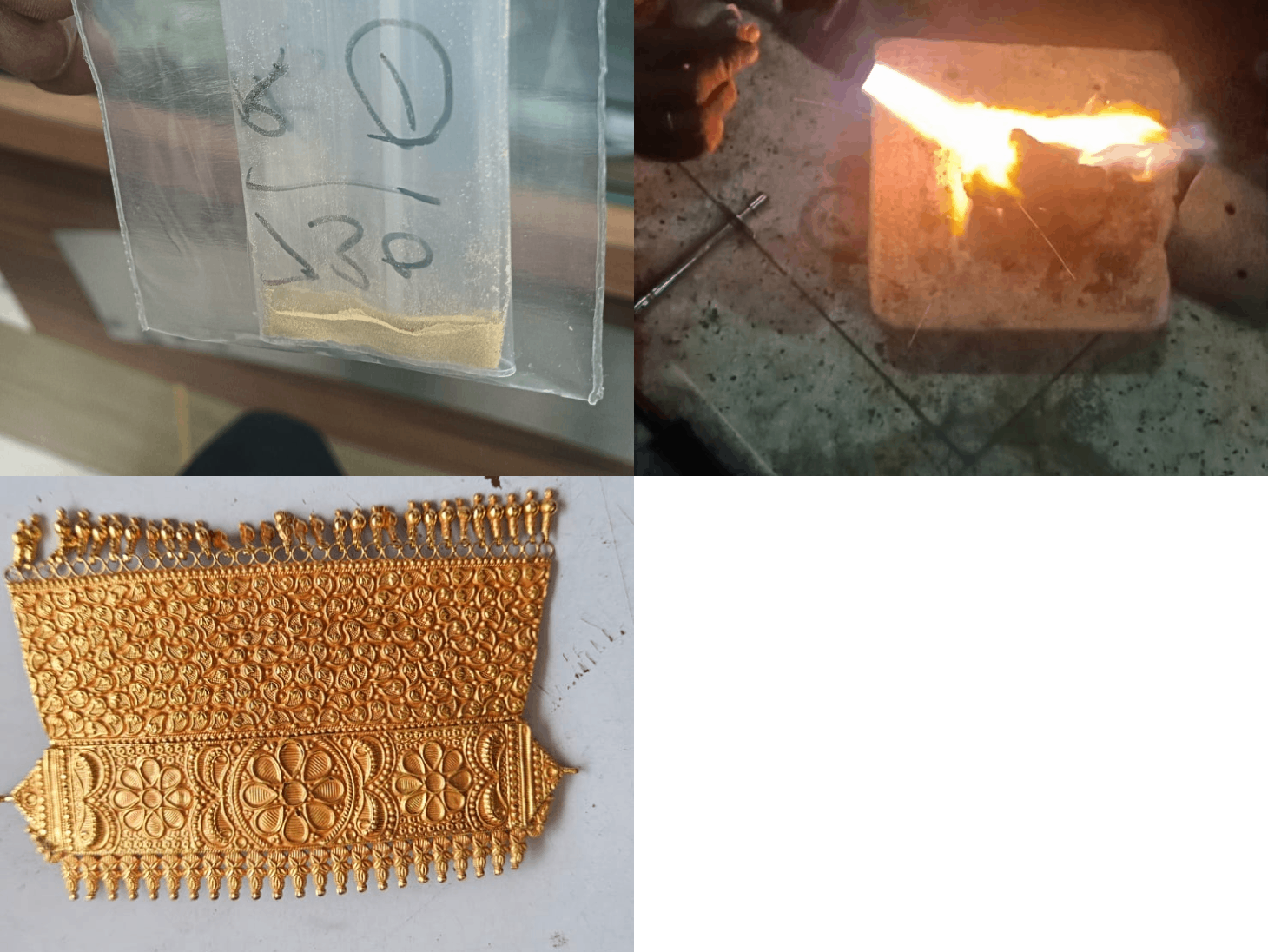
An undercover investigation in Jodhpur has exposed a gold adulteration method using Chinese-sourced rhenium powder that passes standard X-ray fluorescence (XRF) purity tests and receives official 22-karat Bureau of Indian Standards (BIS) hallmarks. In a controlled test, mixing 1 gram of rhenium into 7.83 grams of pure gold yielded jewelry with only 81.73% actual gold—roughly 20 karats-while machines certified it at 91.6% purity.
Quick summary:
The loophole: Rhenium has a density of 21.01 g/cm³, slightly heavier than pure gold (19.32 g/cm³), allowing fraudsters to pad weight without triggering density or basic surface scans.
The financial hit: A 10-gram (one tola) ornament adulterated at this ratio carries roughly 20-karat gold content but sells at 22-karat prices, costing buyers around ₹14,700 per tola at a ₹1.5 lakh rate.
Why scanners miss it: Standard retail XRF analyzers and rapid hallmarking checks often fail to flag rhenium unless calibrated with specific element libraries and small collimators, leaving destructive fire assay as the reliable referee test.
How the Jodhpur rhenium test beat hallmarking and retail scanners
Reporters working with a Jodhpur jeweler tested the adulteration process by blending 1 gram of imported rhenium powder into 7.830 grams of 24-karat gold, bringing the bar weight to 8.830 grams. When scanned on standard testing equipment, the alloy registered as 24-karat gold despite losing more than 11% of its actual gold share.
The jeweler then added 0.75 grams of conventional alloying metal to craft a 9.580-gram traditional Rajasthani ornament known as a deshi aad. Though the finished piece contained just 7.830 grams of real gold—an actual purity of 81.73%, or roughly 20 karats-it passed six separate evaluations, including an authorized hallmarking center that stamped it with a 92K916 (22-karat) mark.
Testing across retail showrooms showed the same blind spot:
A branded jewelry showroom on Sardarpura B Road evaluated the piece as 22-karat gold, offering ₹1.17 lakh in cash or ₹1.23 lakh in exchange value.
A karat-testing machine at a Nai Sadak showroom displayed 93.70% gold, 5.39% silver, and 0.90% copper, with zero mention of rhenium on the readout.
Three bullion and jewelry trade associations confirmed to investigators that rhenium-laced gold has entered domestic circulation. With India consuming roughly 2,000 to 2,200 kilograms of gold daily, even isolated batches create substantial exposure for retail buyers and refiners.
Where the powder comes from and how it enters Indian markets
Tracing the supply chain led investigators to a supplier in Shenzhen, China, who claimed to operate a rhenium facility and stated that up to 25% rhenium could be blended into gold without triggering standard shop-floor detectors. The supplier quoted two grades at $3,000 and $3,400 per 100 grams and pointed to active distribution contacts across Indian bullion hubs, including Mumbai and Ahmedabad.
Contacting a Mumbai-based intermediary confirmed local availability. A 1-gram sample was shipped to Jodhpur for ₹5,000 plus ₹300 in courier charges. At roughly ₹5,000 per gram compared to ₹15,000 per gram for 24-karat gold (at ₹1.5 lakh per 10 grams), swapping 1 gram of gold for rhenium nets an illicit margin of roughly ₹10,000 on every gram replaced.

Why XRF machines and acid tests fail to catch rhenium
Gold purity fraud traditionally relied on copper, silver, or zinc, which lower an alloy's density and alter its color. Heavy refractory metals change the equation. Rhenium carries a density of 21.01 g/cm³ (Wikipedia), closely matching gold's 19.32 g/cm³, and resists nitric acid and aqua regia at room temperature. Traditional touchstone and acid tests cannot dissolve it, and specific-gravity checks show no suspicious drop in weight.
Even modern X-ray fluorescence (XRF) analyzers struggle under routine retail conditions for three technical reasons:
Spectral overlap: Rhenium's fluorescent X-ray emission peaks sit close to those of gold, tungsten, and zinc. Without high-resolution silicon drift detectors (SDD) and updated fundamental-parameter software algorithms, older machines misread rhenium signals as gold.
Surface-only penetration: XRF beams penetrate only a few microns beneath the surface. Because rhenium has an extreme melting point of 3,186°C compared to gold's 1,064°C, powder mixed into molten gold does not form a uniform solution—it stays suspended as microscopic pockets inside the metal.
Large collimator beams: Retail machines often use wide X-ray beams for speed. If rhenium clusters beneath the surface or in uneven pockets, a wide scan averages out the reading and masks the impurity.
Similar heavy-metal adulteration alerts involving ruthenium, iridium, and osmium have also surfaced in major bullion hubs like Indore's Sarafa market (Mint), prompting trade bodies to warn artisans and refiners against unverified bullion.

What BIS hallmarking rules require—and where gaps remain
Under Bureau of Indian Standards (BIS) testing guidelines, Assaying and Hallmarking Centres (AHCs) are required to screen items by XRF for prohibited elements—specifically listing iridium, ruthenium, cadmium, and osmium—before conducting destructive fire assaying (cupellation) on a 300 mg to 500 mg sample.
In practice, two gaps allow rhenium-doped jewelry to slip through:
Unlisted prohibited element: Standard BIS XRF screening templates prioritize iridium, ruthenium, cadmium, and osmium. Older AHC software profiles without rhenium in their active element library fail to flag it automatically.
Sampling limitations: In batch hallmarking, centers test representative samples from a lot rather than melting every finished ornament. If rhenium powder is unevenly distributed inside individual pieces, non-destructive surface checks pass the batch.
Unlike XRF, fire assay melts the gold sample with lead in a cupel at around 1,200°C (SPECTRO Analytical Instruments). While base metals oxidize and absorb into the cupel, rhenium's 3,186°C melting point prevents it from alloying cleanly—often leaving dark surface spots, brittle edges, or incomplete cupellation during refining, which is usually when artisans first spot the fraud.

How buyers and jewelers can protect themselves
Retail buyers cannot detect rhenium visually or with home magnets, and an HUID stamp alone only confirms that the piece passed through a registered center—not that internal powder pockets were caught.
Buy from established, accountable jewellers: Stick to retailers that offer a written 100% buyback guarantee on metal value and issue a proper GST tax invoice listing net gold weight, karatage, and HUID codes.
Verify the HUID on the BIS Care app: Before paying, enter the six-character alphanumeric HUID code into the official BIS Care mobile app to confirm the registered jeweler, article type, and hallmarking center match the piece in hand.
Beware of off-market discounts: Bullion or ornaments offered noticeably below prevailing India Bullion and Jewellers Association (IBJA) rates—especially in cash-only transactions—carry the highest adulteration risk.
Demand multi-point SDD-XRF scans for old gold: Jewelers and loan companies buying scrap or unhallmarked gold should use multi-collimator, high-resolution SDD-XRF systems calibrated for rhenium and tungsten, and verify suspicious melts via fire assay before payout.
Happy Business Park Gagwana Ajmer | RERA Approved Commercial Plots
Frequently asked questions
What is rhenium powder and why is it mixed into gold?
Rhenium is a rare, silvery-gray industrial heavy metal with a density of 21.01 g/cm³ and a melting point of 3,186°C. Fraudsters mix rhenium powder into molten gold because it adds weight without reducing density, costs roughly a third of pure gold's price, and evades basic acid and surface purity checks.
Can BIS hallmarking machines detect rhenium in gold?
Not all of them. Older XRF machines at assaying centers and retail showrooms often miss rhenium because its X-ray fluorescence spectrum overlaps with gold and zinc, and standard BIS screening lists focus primarily on iridium, ruthenium, cadmium, and osmium. Newer multi-collimator SDD-XRF analyzers with updated software libraries can detect it.
How much money does a buyer lose on rhenium-adulterated gold?
In the Jodhpur test case, mixing 1 gram of rhenium into 7.83 grams of 24K gold reduced actual purity to 81.73% (roughly 20K) while selling as 22K (91.6%). At a market rate of ₹1.5 lakh per 10 grams, a buyer loses roughly ₹14,700 per tola.
Does rhenium melt and mix evenly with gold?
No. Pure gold melts at 1,064°C, whereas rhenium melts at 3,186°C. Because typical jewelry furnaces cannot melt rhenium, the powder remains suspended as microscopic grains or pockets inside the gold rather than forming a true uniform alloy.
How can a jeweler or refiner confirm rhenium contamination?
Refiners and labs detect rhenium using high-resolution SDD-XRF spectrometers set to narrow collimator beams across multiple spots, or by melting the gold for fire assay and refining, where rhenium's unmelted particles create black surface specks, brittleness, and weight discrepancies.
Is rhenium the only metal used in modern gold adulteration?
No. Bullion associations across India, including traders in Indore and Jodhpur, have reported adulteration using other high-density metals such as tungsten, iridium, ruthenium, and osmium to defeat traditional touchstone and density tests.
Does the BIS HUID number guarantee gold has zero rhenium?
An HUID confirms that a piece was tested and stamped by a BIS-recognized Assaying and Hallmarking Centre, which protects against most purity fraud. However, if a center uses older XRF calibration profiles or relies on batch sampling where rhenium pockets are missed, an HUID-stamped piece could still escape detection.
What happens if you try to resell rhenium-mixed gold later?
When a jeweler or refinery melts the ornament down to recycle the gold, the high-melting-point rhenium separates out as dark residue or causes cracking, revealing the lower actual gold recovery and triggering major deductions or rejection.



No comments yet — be the first to share your thoughts!